- Free Call : +92 321 4374781
Tonsillectomy and Adenoidectomy
Tonsillectomy
Tonsils are collection of soft tissues at the back of our mouth which can be seen easily when swollen. Tonsils are part of your defence system. There are many other ways your body stands against infection so if tonsils are infected badly then no need of keeping them and can be removed. When infected, these can cause pain, difficulty in swallowing, fever and ear pain and can cause other diseases.If documented episodes of recurrent infection in the tonsil happens oftenly then you may be a candidate of tonsillectomy.
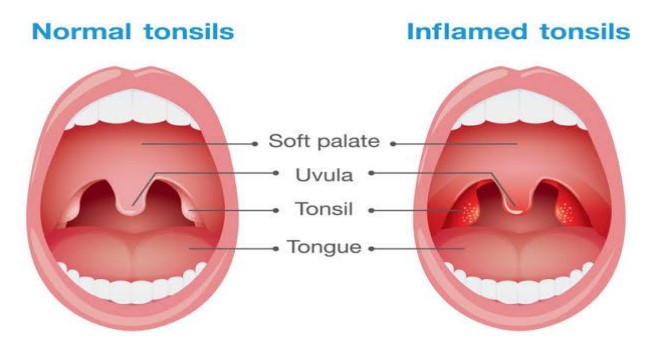
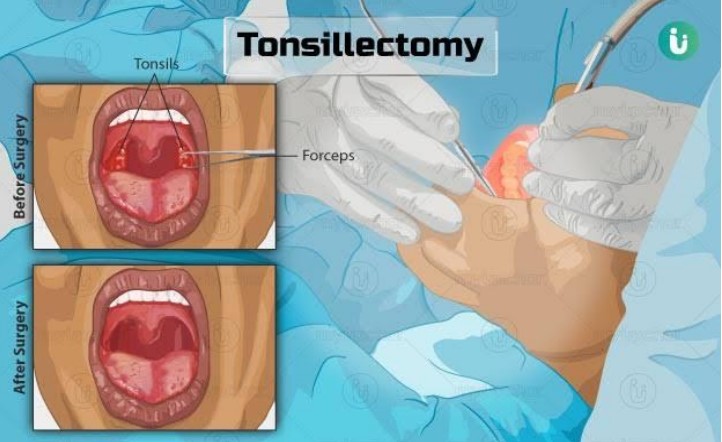
Tonsillectomy (removal of this tissue) if advised by ENT doctor can treat the above mentioned problems if the cause is tonsillitis ( سوزش کی غدود)
Tonsillectomy is an operation most often done in childhood; however, it can be done in adults as well. It is a common procedure. Tonsillectomy is done under General anaesthesia. Patient is kept nder observation for bleeding and usually sent home after 24 hours. Liquid diet is recommended for a short time. Then semisolid and solid diet can be started within 2-3 days after surgery and oral hygiene has to be maintained. Over the counter painkillers are recommended. Patients usually recovers in 2 weeks with no complications. Procedure: There are many methods of removing tonsils. Tonsils are approached by mouth and removed. As in any surgery, some complications have to be kept in mind but most patients usually recover without any permanent problems.
What are the benefits of tonsillectomy?
Tonsils are removed when they cause problems. Common reasons for removing tonsils are:
- Repeated attacks of infection of the tonsils(tonsillitis).
- Large tonsils if cause difficulty in breathing,difficulty in eating or disturbed sleep.
- Mass or growth on the tonsil which need further investigation.
What happens after the operation? You will have to stay in hospital for monitoring for few hours.Usually you will b e able to go home the same day or the next day. Pain relief After tonsillectomy you may have pain in throat or in the ear. You have to take pain killer medicines regularly every 4 to 6 hours for at least the first day or two. Pain killers may be needed to continue for one to two weeks. Children usually respond well to pain killers like paracetamol or ibuprofen. Adults may need strong pain killers.
Diet after operation
You can start to eat or drink as soon as you feel comfortable after the operation. Usually plain fluids like water, juice and ice cream are advised in first 24 hours. Next day you can start eating soft and semisolids like Khichri (Rice), Dalya (porridge food), Custard jelly and boiled eggs, toasts ,cereals etc. It is very essential to drink plenty of fluids which will help in relieving dryness or soreness in the throat and make it possible to eat which will help in early healing of the tonsil bed area.
Brushing Teeth
It is usually recommended to brush the teeth after operation which will maintain the oral hygeine and keep the mouth free from germs and fresh.
Going back to school and work
Children can take off from school for one to two weeks after tonsillectomy. Adults may need two weeks off from work as they ay experience more pain in throat and longer time for healing than children.
When to seek advice from your doctor?
If you have observed thick white or yellow coating on the back of the throat, so don’t worry this is normal for a week or two after operation. This is part of healing process. If you develop high grade fever after tonsillectomy in first or second week after tonsillectomy, you must seek you doctor immediately. This may suggest infection and antibiotics may be necessary for treatment. If there is fresh bleeding from back of the throat after tonsillectomy, you should report in the hospital urgently for management. If you are taking painkillers and these are not working and you feel much difficulty in eating or drinking, must seek medical advice.
Adenoidectomy:
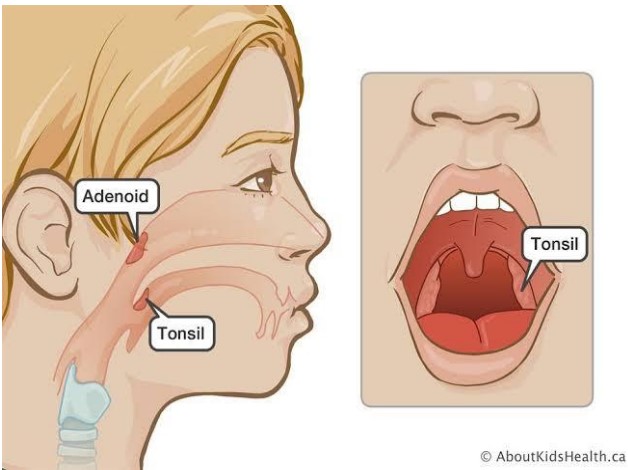
Adenoids are collection of soft tissues like tonsils at the back of nose above the roof of the mouth.They are part of our immune system and helps fight infection and protects the body from bacteria and viruses . If they are enlarged (usually happens in children) they have to be removed if cause severe discomfort and interfere with daily life
When adenoids removal is needed?
Adenoids may need to be removed if your child has:
- Breathing difficulty – child will not be able to breath through nose rather through mouth,that may cause dryness of mouth and cracked lips
- Difficulty in sleeping-child may start to snore(noisy breathing) and experience disturbed sleep and feel sleepy during the day(sleep apnoea)
- Persistent and recurrent problems in the ear like middle ear fluid collection (glue ear) or infection in middle ear(otitis media).
- Adults usually do not need an adenoidectomy because adenoids usually shrink with age and don’t cause problems.
How an adenoidectomy is done?
This operation is usually done by an ear,nose and throat (ENT) surgeon under general anaesthesia.Adenoids are removed through the mouth.Afterwards,your child will need to stay in the recovery room for few hours for observation.
Patient is kept under observation for bleeding and usually sent home after 24 hours.
Liquid diet is recommended for a short time. Oral hygiene has to be maintained. Over the counter painkillers are recommended.
Patients usually recovers in 2 weeks with no complications.
When to seek medical advice?
If your child has following symptoms shortly after surgery:
- bright red bleeding from mouth
- Very high temperature or they feel hot or shivery
- If child not drinking water adequately
- Intolerable pain even after taking painkiller medicines
Connect with Your ENT Specialist Today

Main Links
Our Services
Copyright © 2026 Dr Athar Adnan Uppal. All rights reserved.
Design & Developed by Techno Cro